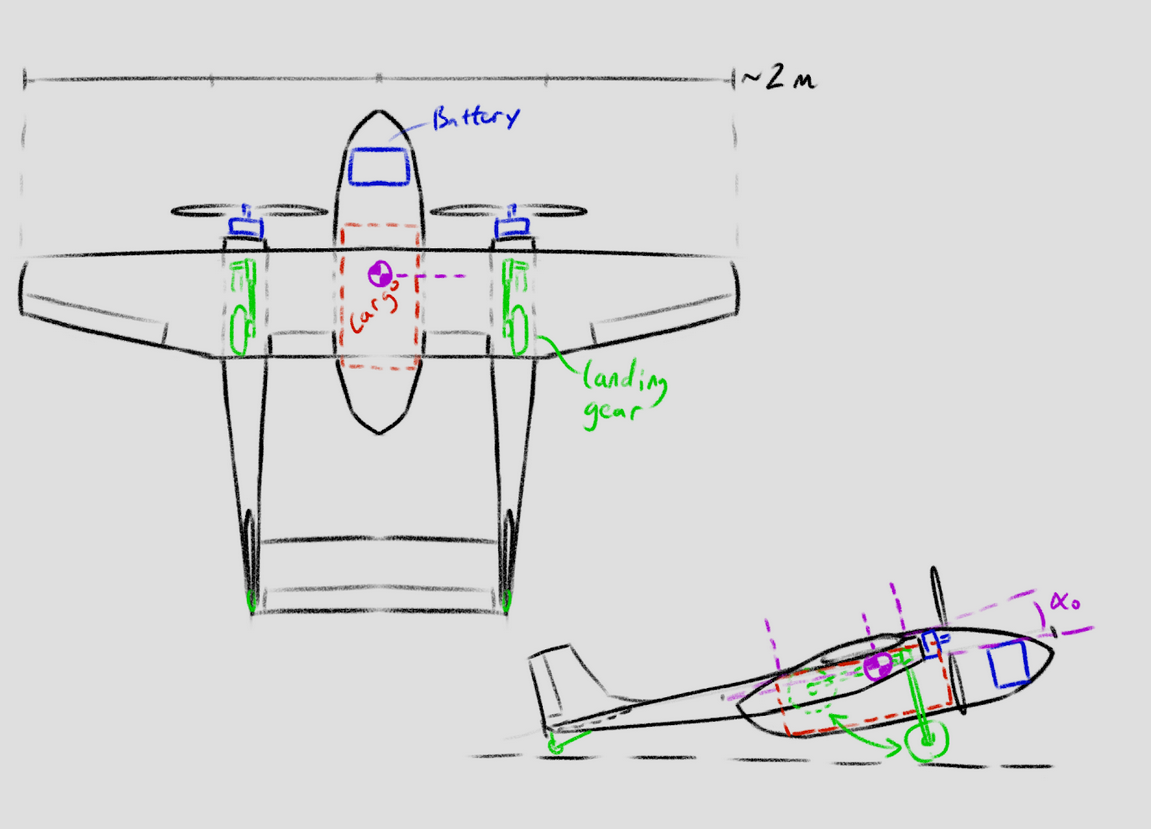
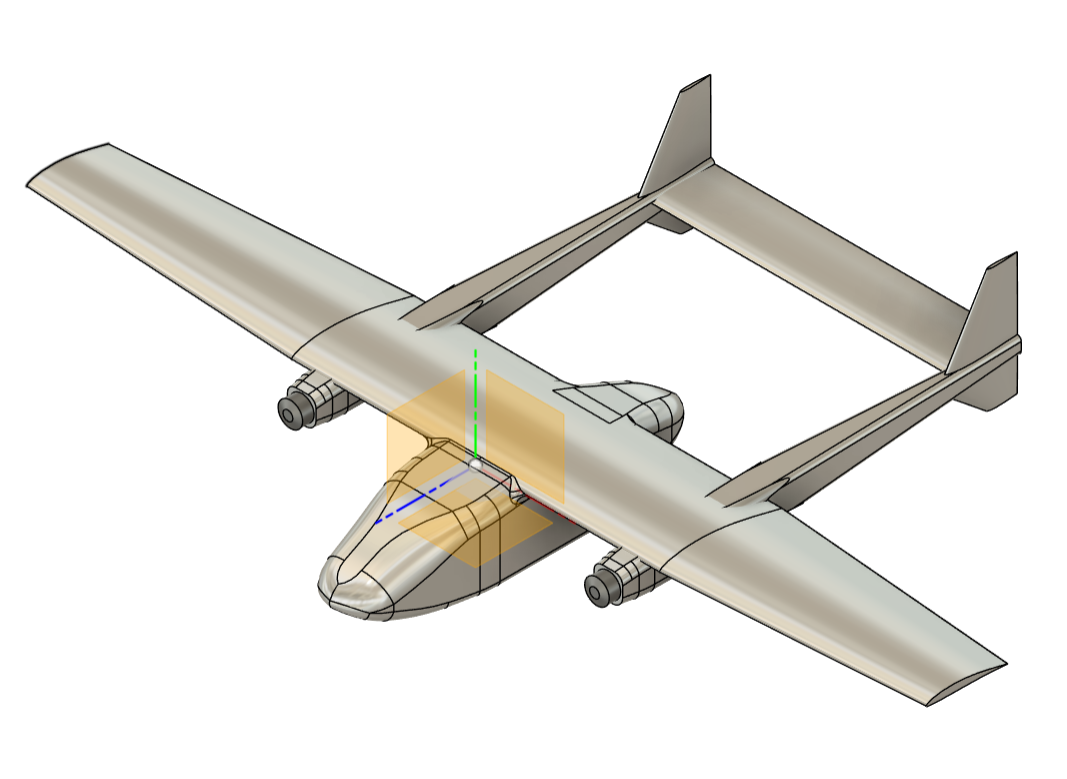
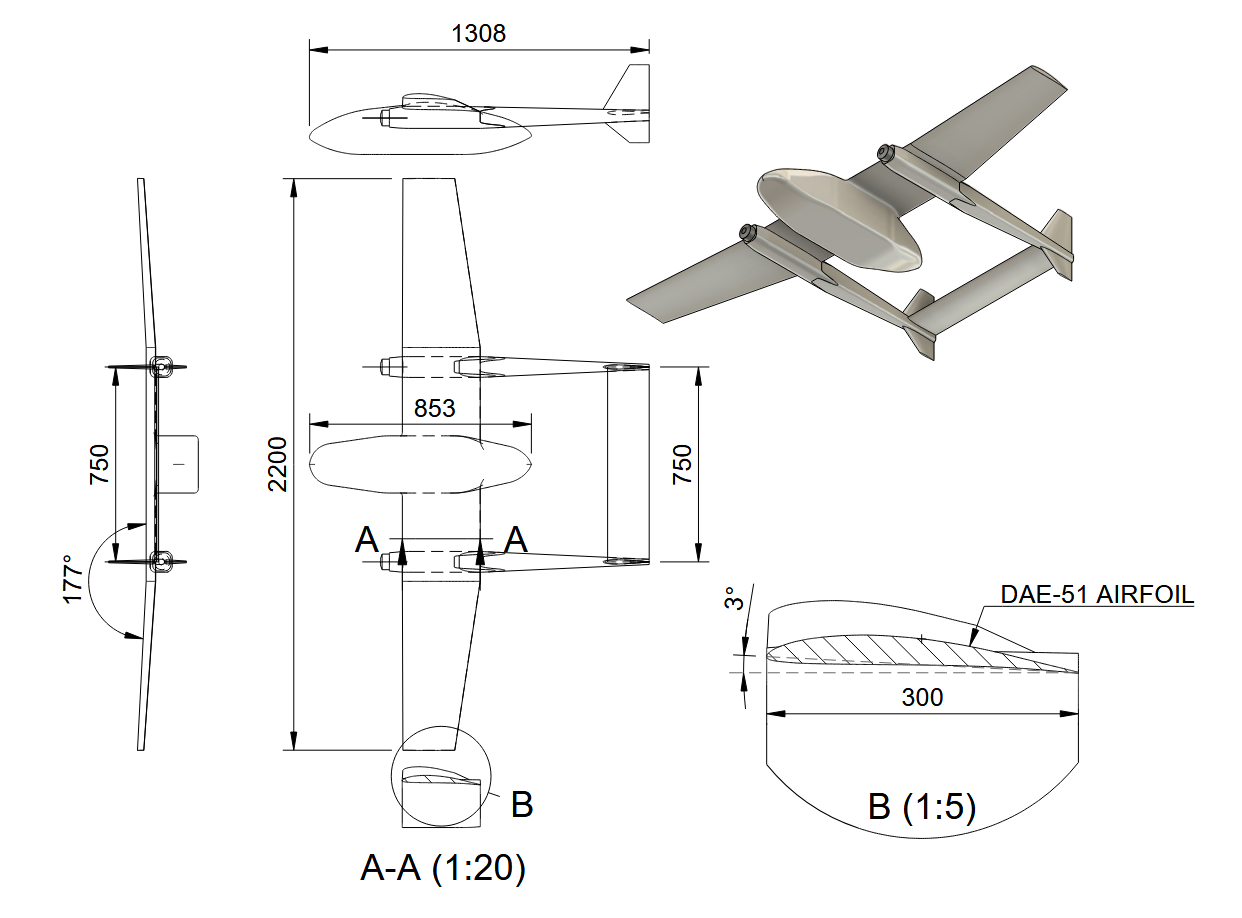
As a senior majoring in mechanical engineering at Duke, I am coming up on my last semester. Consequently, we have been grouped into teams to carry out a semester-long project to demonstrate what we are capable of as graduating engineers. I happen to be the project-initiator for my team: our task is to create an unmanned aerial vehicle (UAV) capable of carrying and deploying a small device from an internal cargo bay. Additionally, we will be designing the aircraft to have very short takeoff and landing capabilities; no VTOL due to the added complexity and aerodynamic inefficiencies (plus, I think there are enough VTOL UAVs out there). All keeping within a very tight budget, to prove that making such an aircraft doesn't require industrial processes.
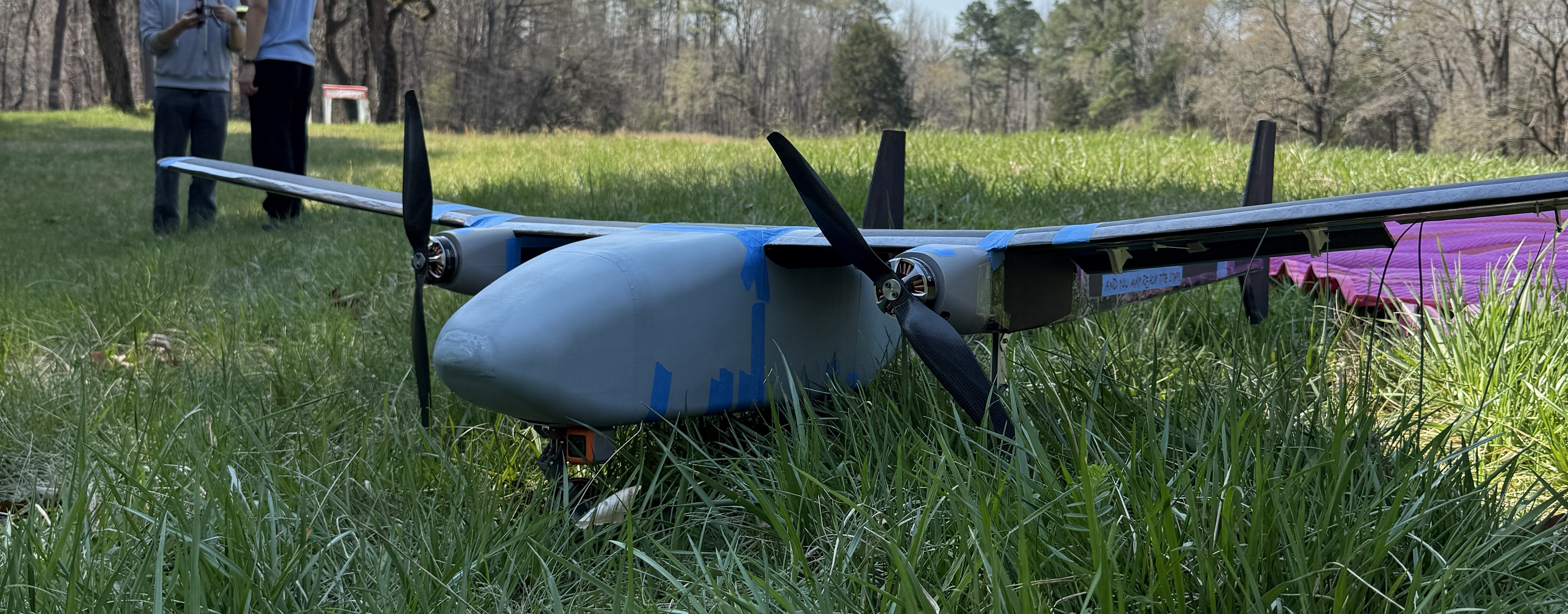
The aircraft has since flown in March 2026, and the construction of a carbon fiber demonstrator (wing-only) has been started to demonstrate standard composite layup techniques. This includes 3D printed molds and vacuum bagging.
Team members: Samara Brogan, Sydney Schaffer, Emily Dunn, Ashley Curwin, Miles Bradley, Ethan FernandezFrom March/April 2026: Finished the prototype, with maiden flight completed! (see below for video)
.
.
.
.
.
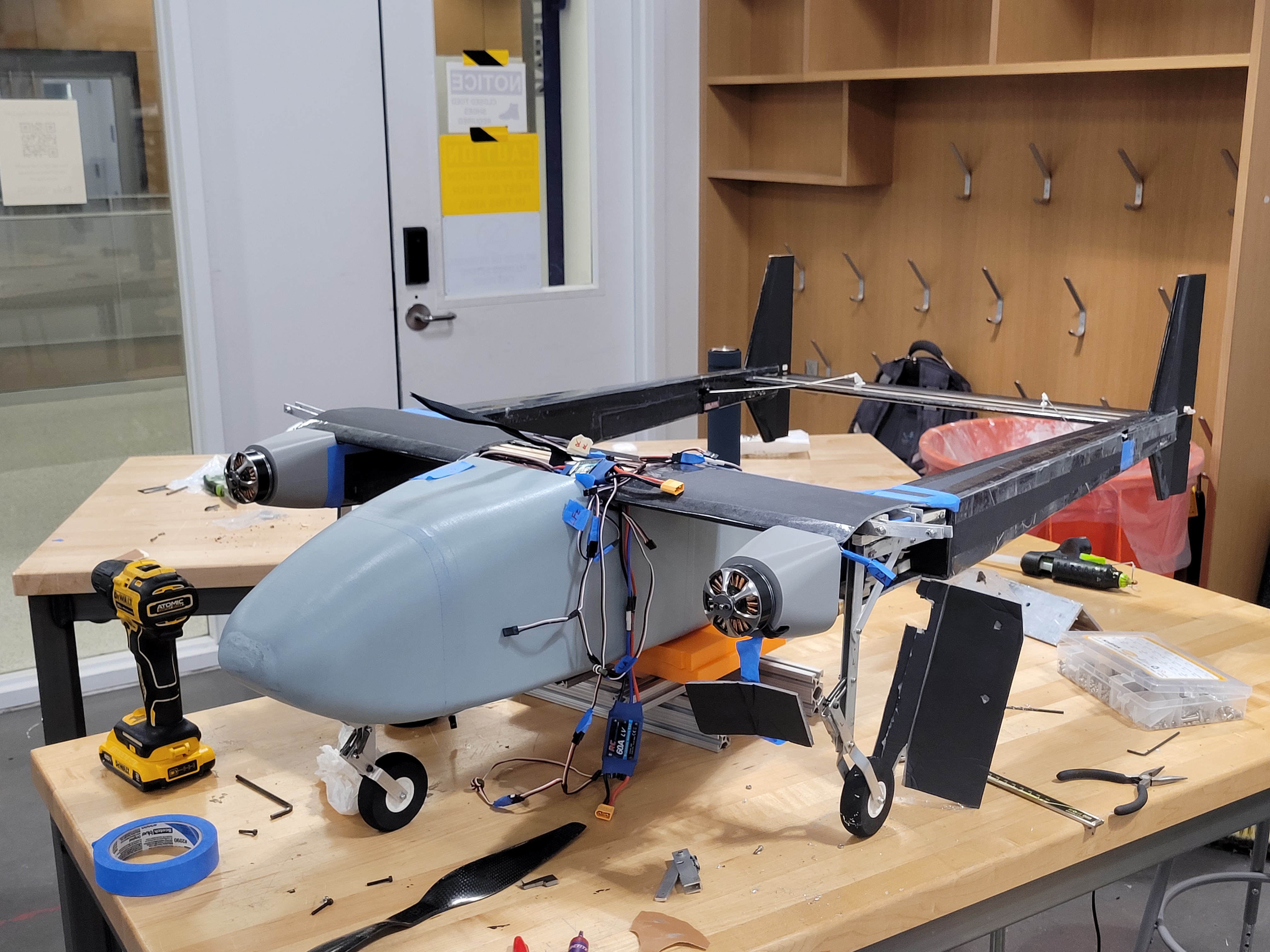 Attaching landing gear.
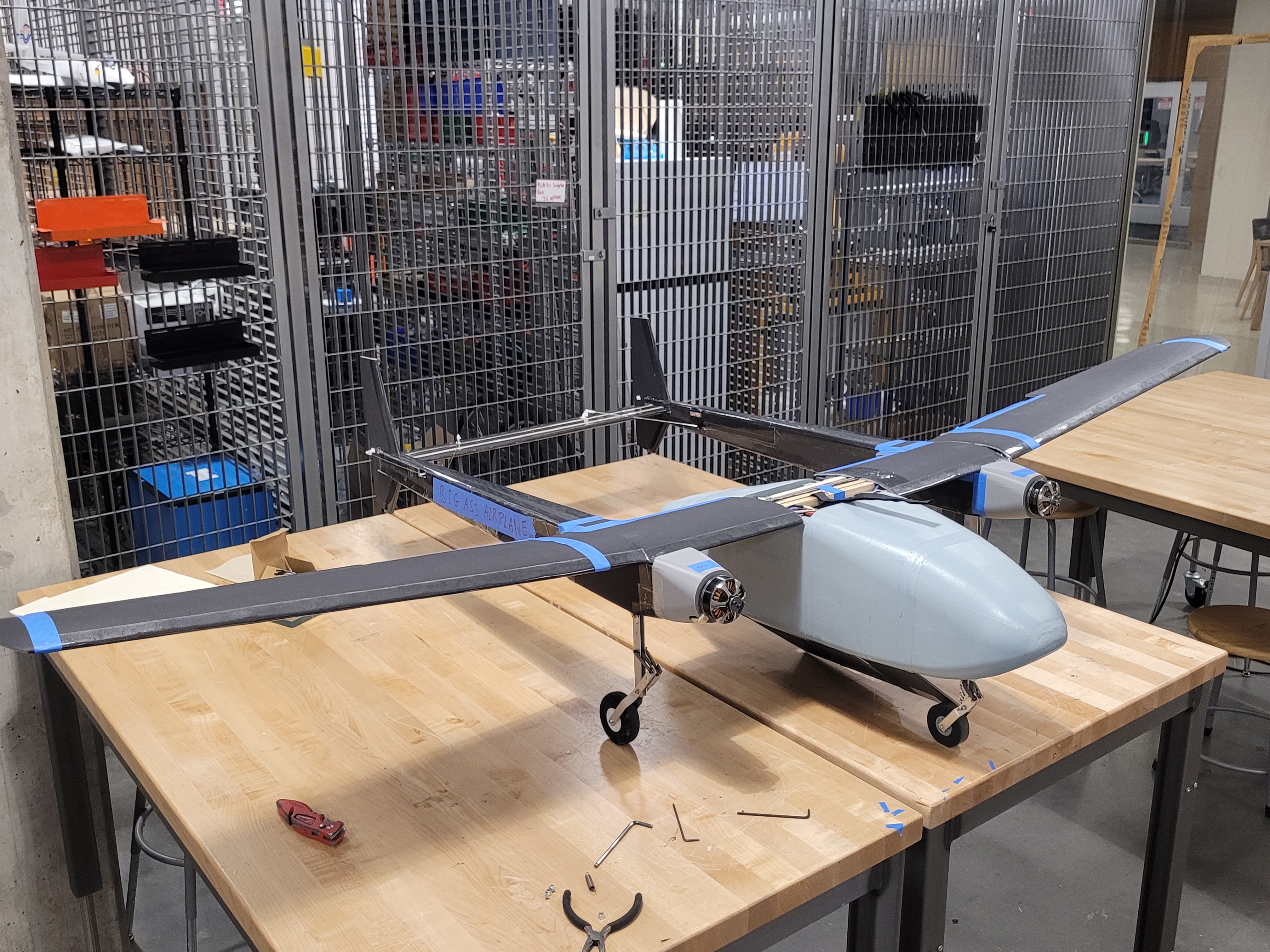 Final assembly.
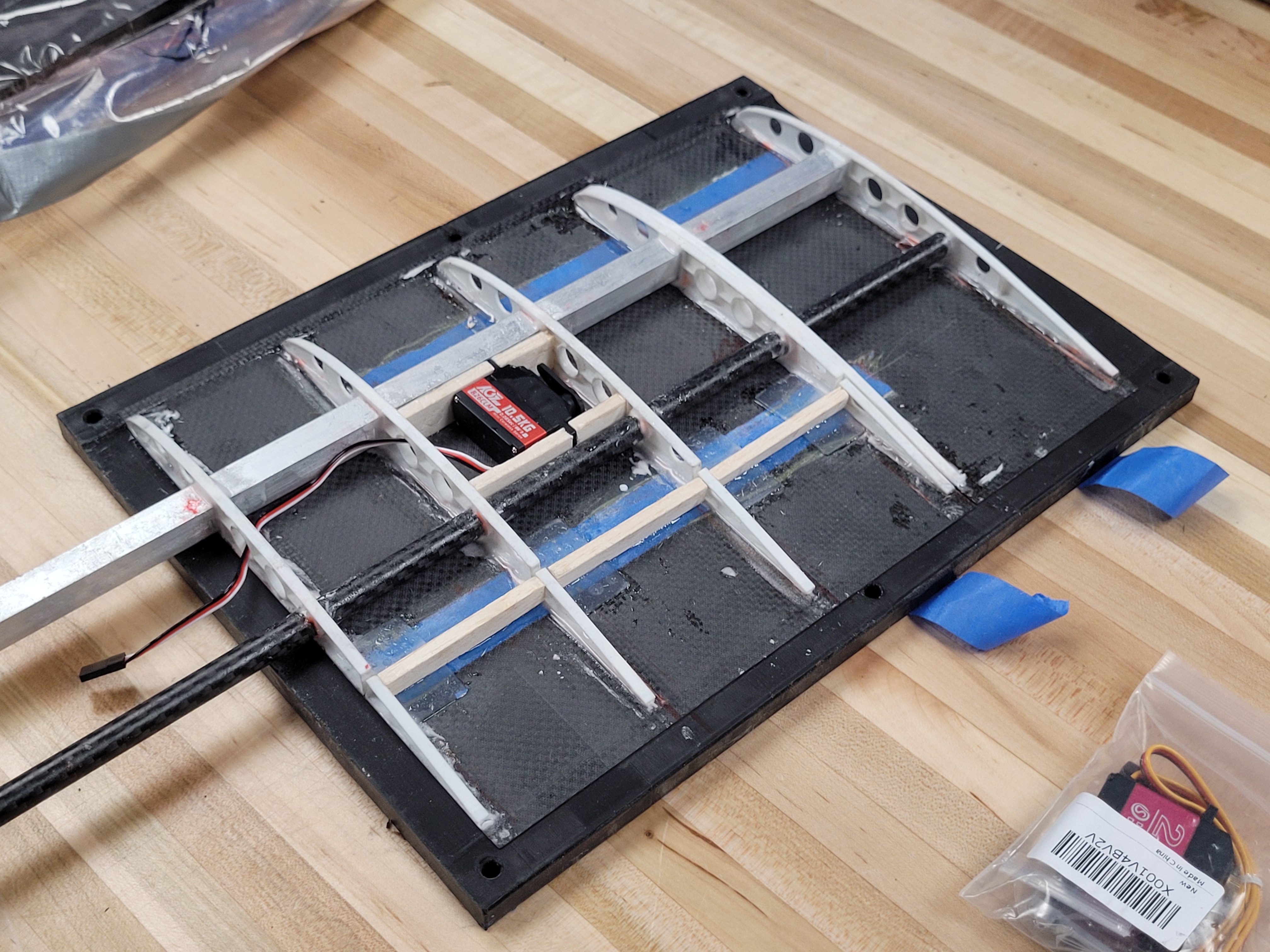 Composite demonstrator- central wing lower airfoil skin.
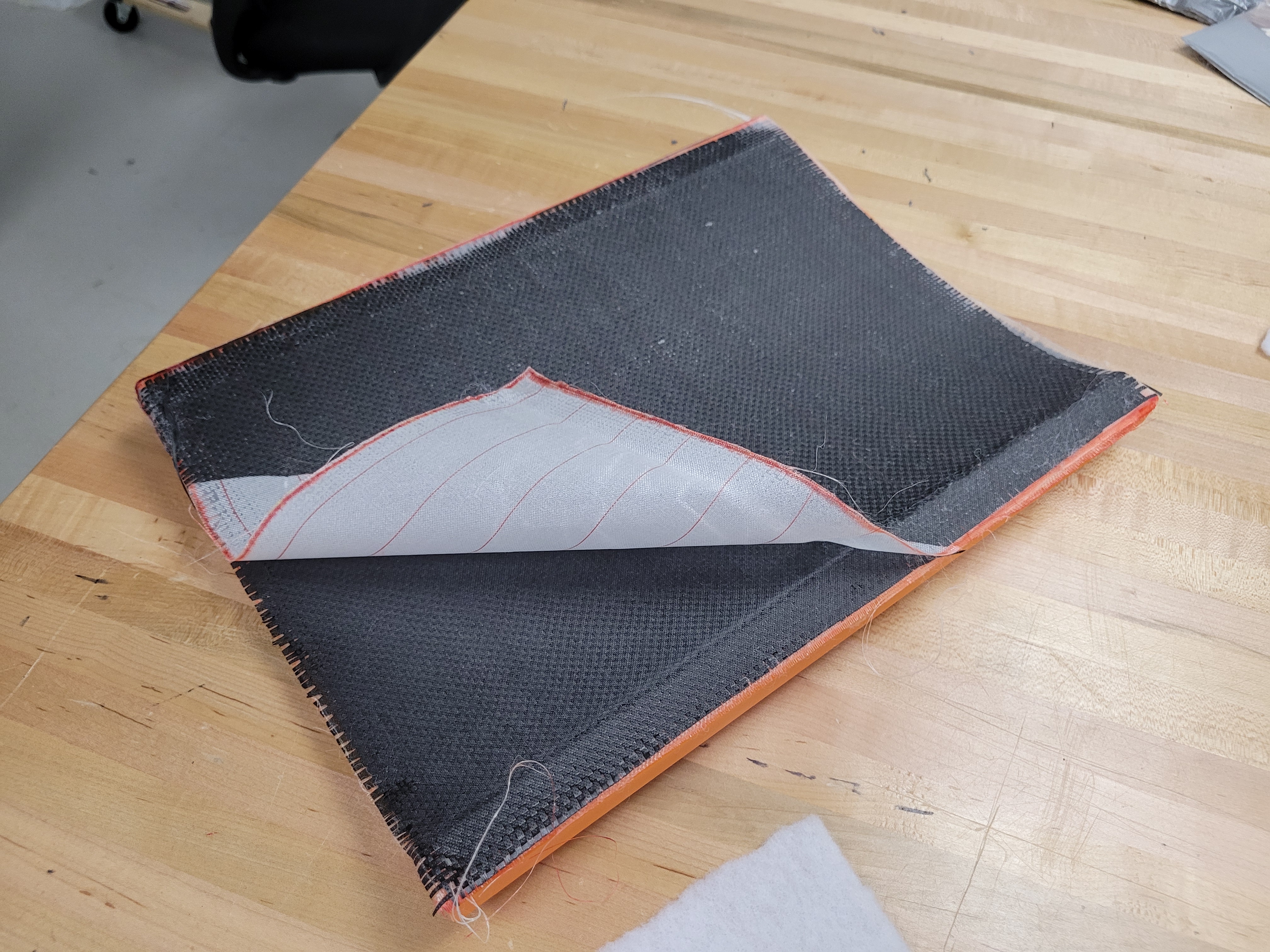 Using peelply to demold.
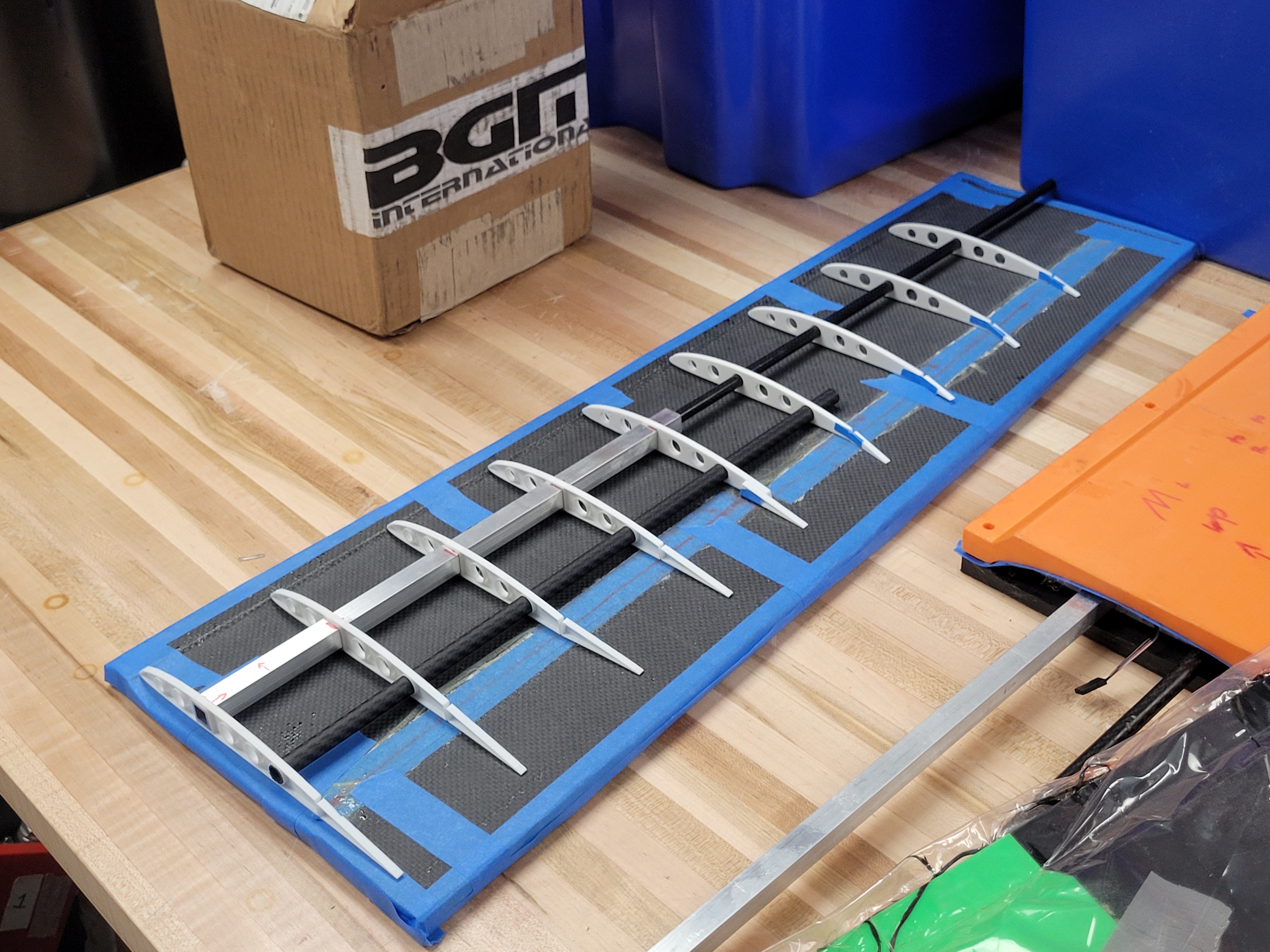 Auxiliary wing.
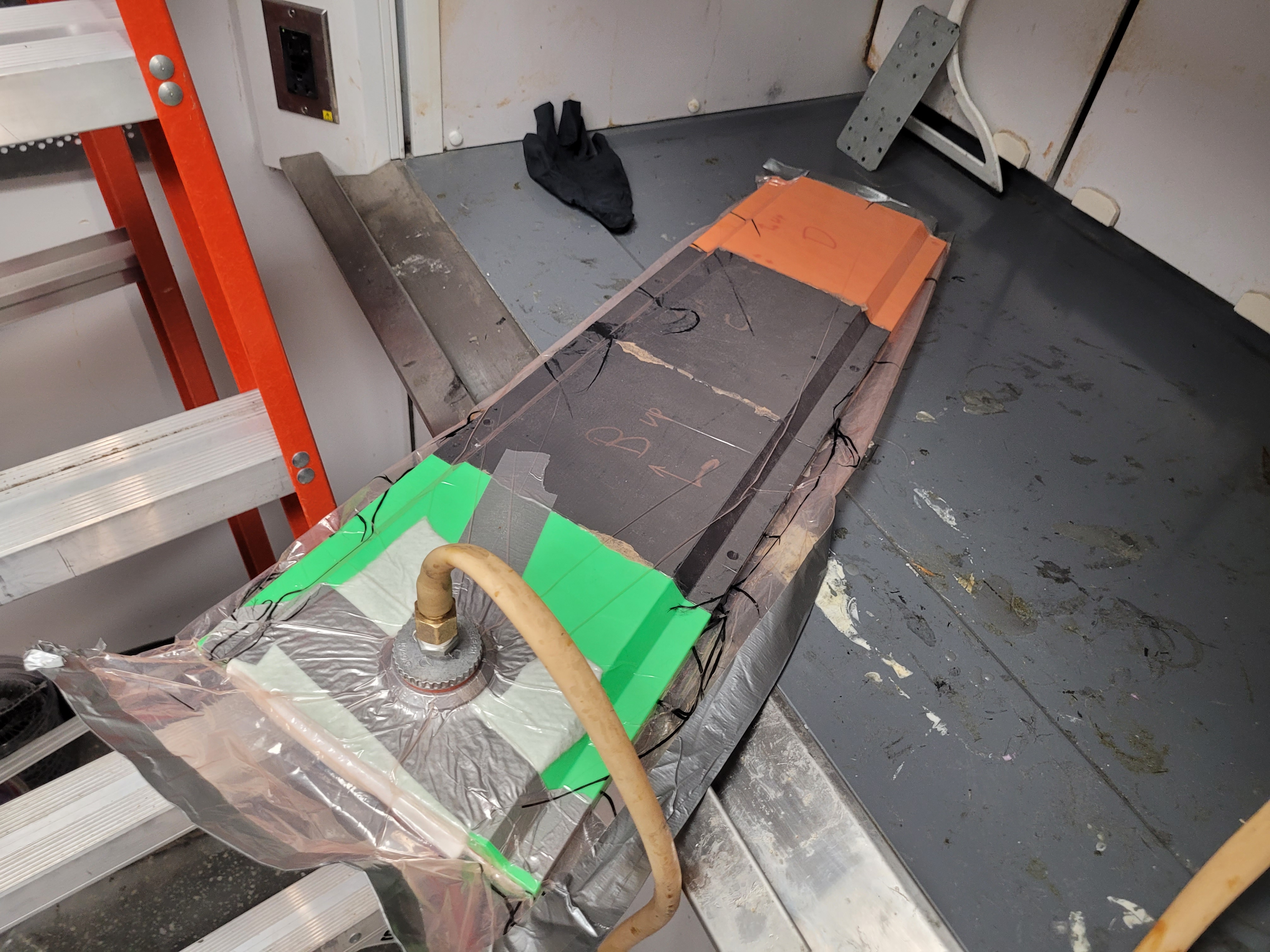 Vacuum bagging setup.
From February 2026: Continued progress on the foamboard prototype. Estimated maiden flight in March.
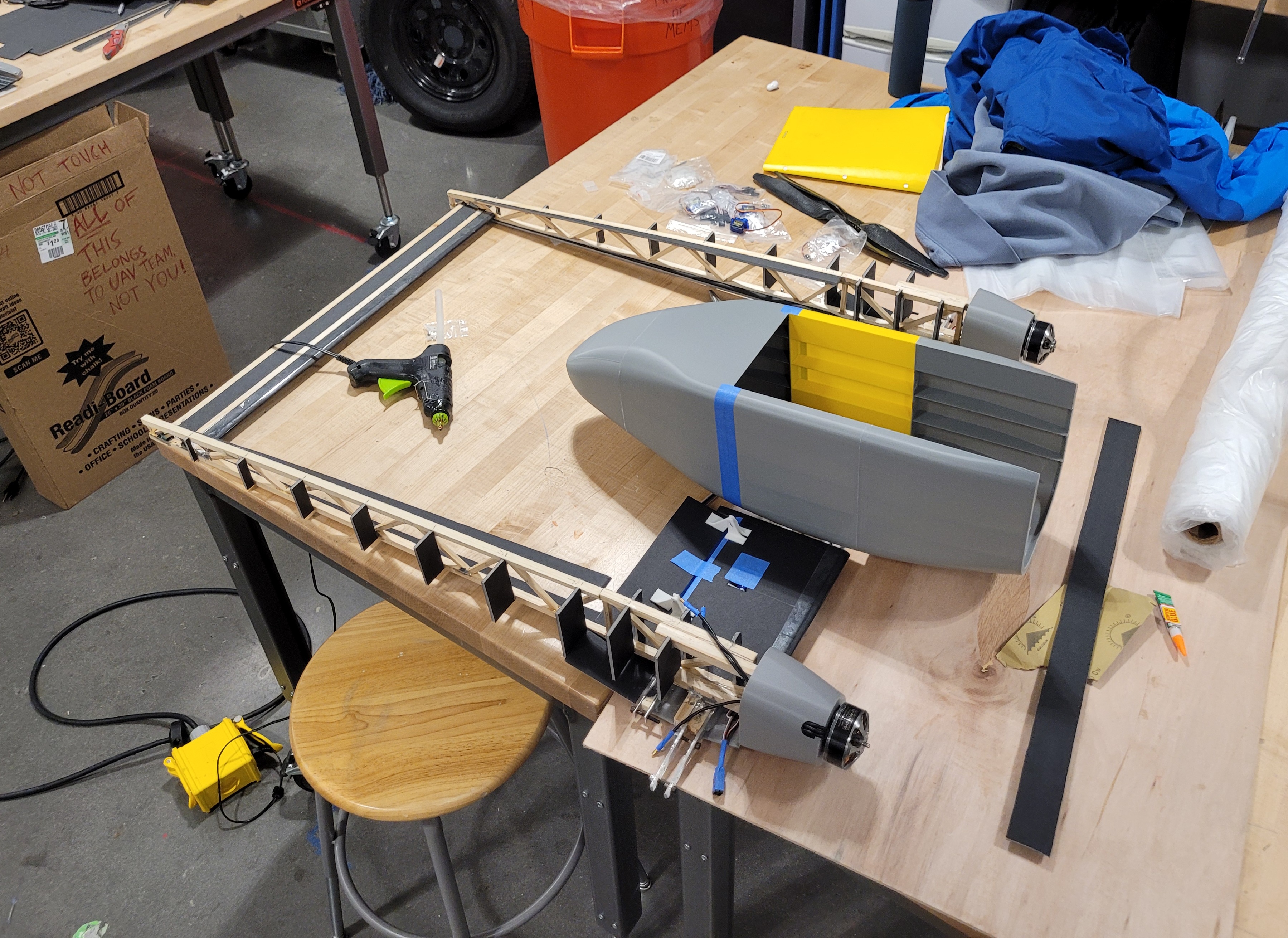 A glimpse into the internal structure of the pylons.
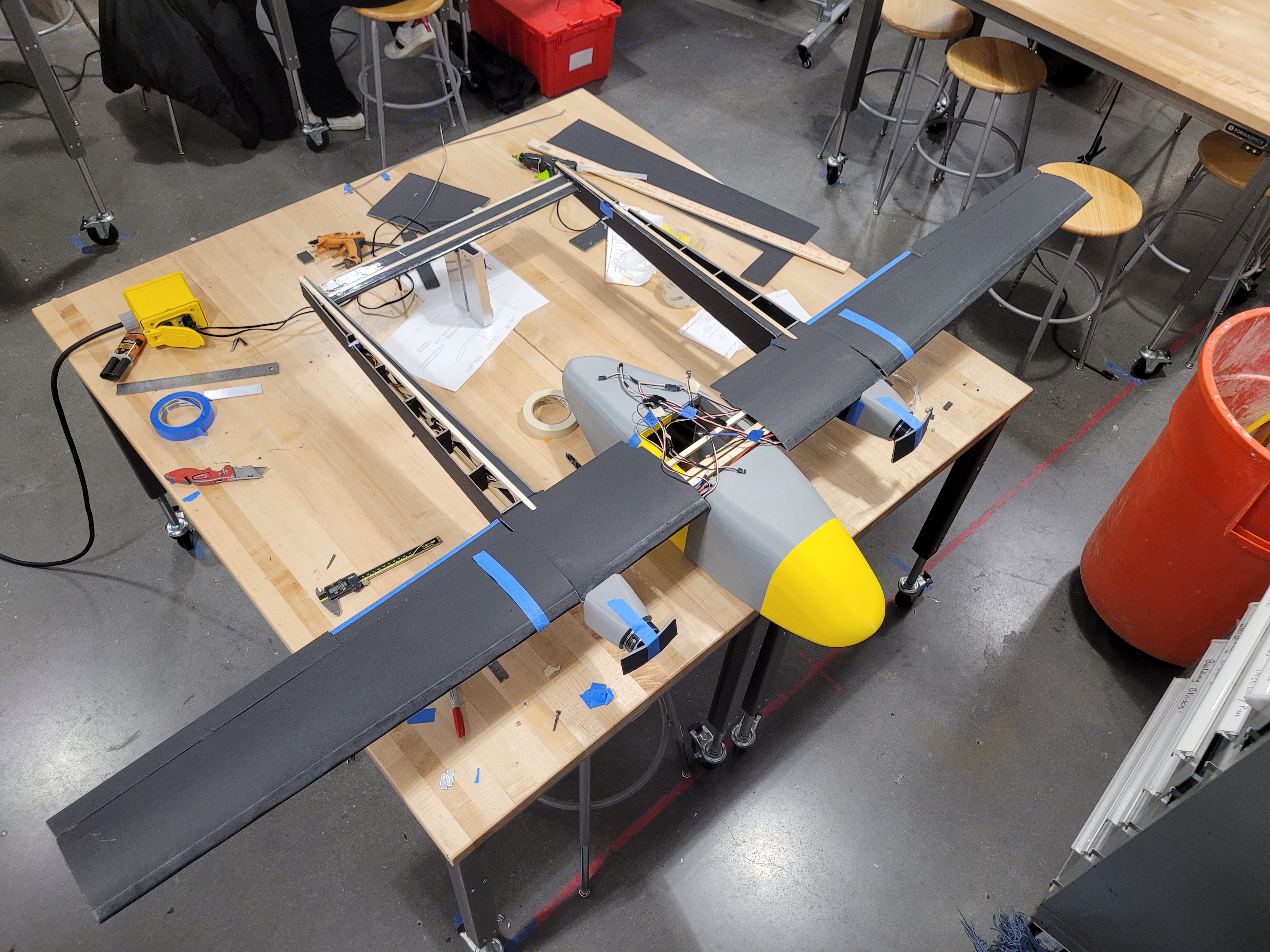 Most up-to-date progress (full wing integration, fuselage-spar mount currently being built).
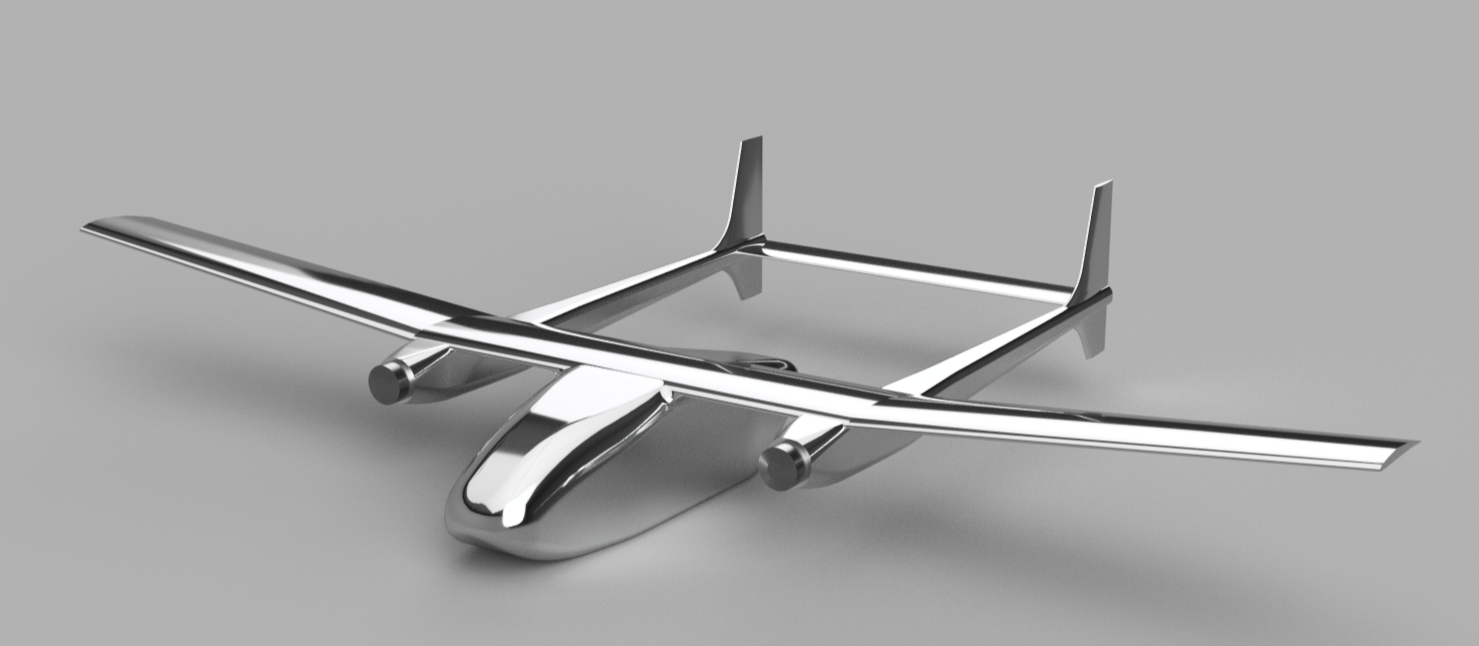
From January 2026: Changes since December: increased aspect ratio of wing (reduced wing chord) for better flight efficiency, and redesigned the fuselage. Pylons are now slimmer and placed closer together, and as a result the length of the extension wings were increased (to retain same wingspan).
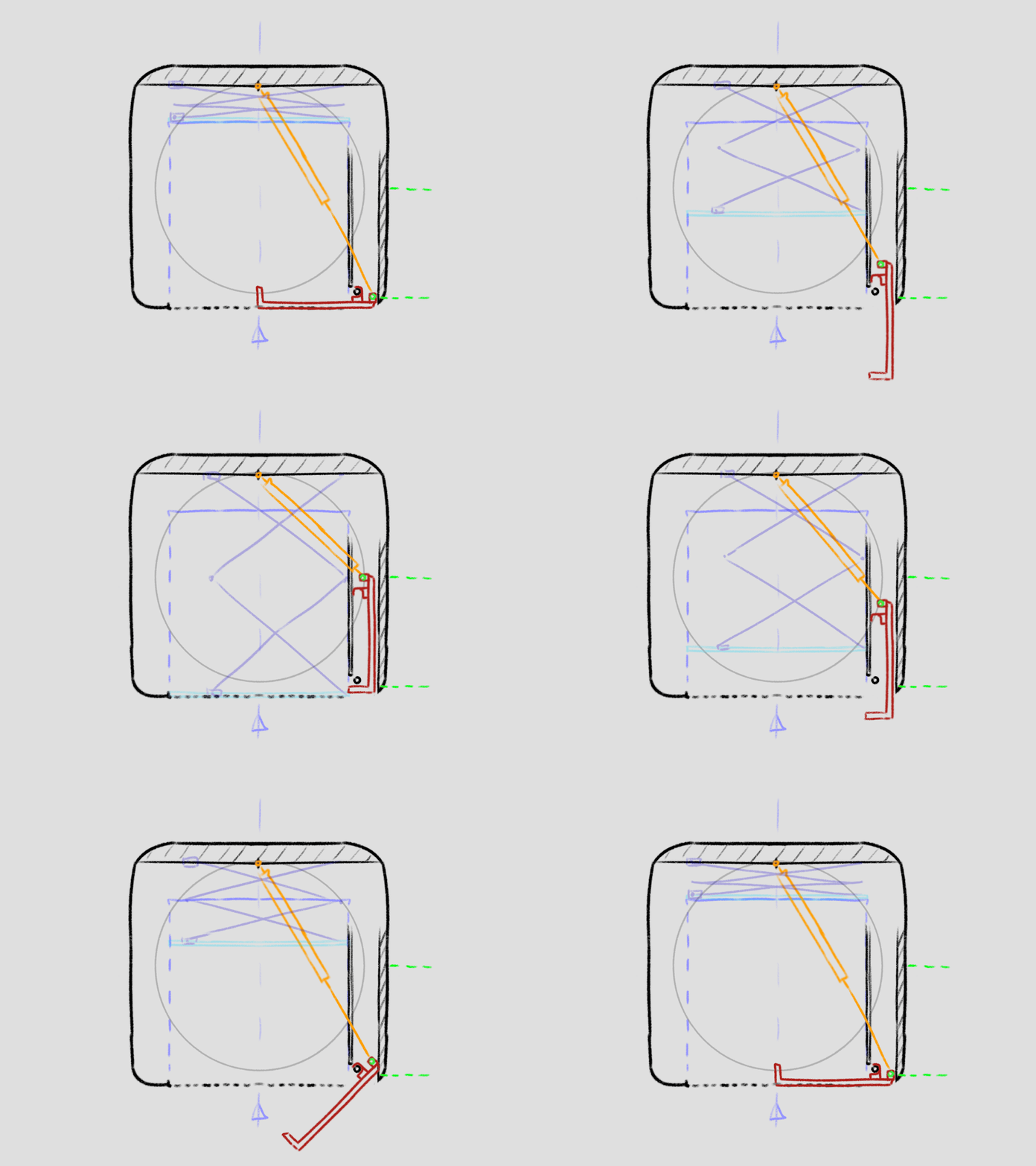 Fuselage cargo bay door mechanism.
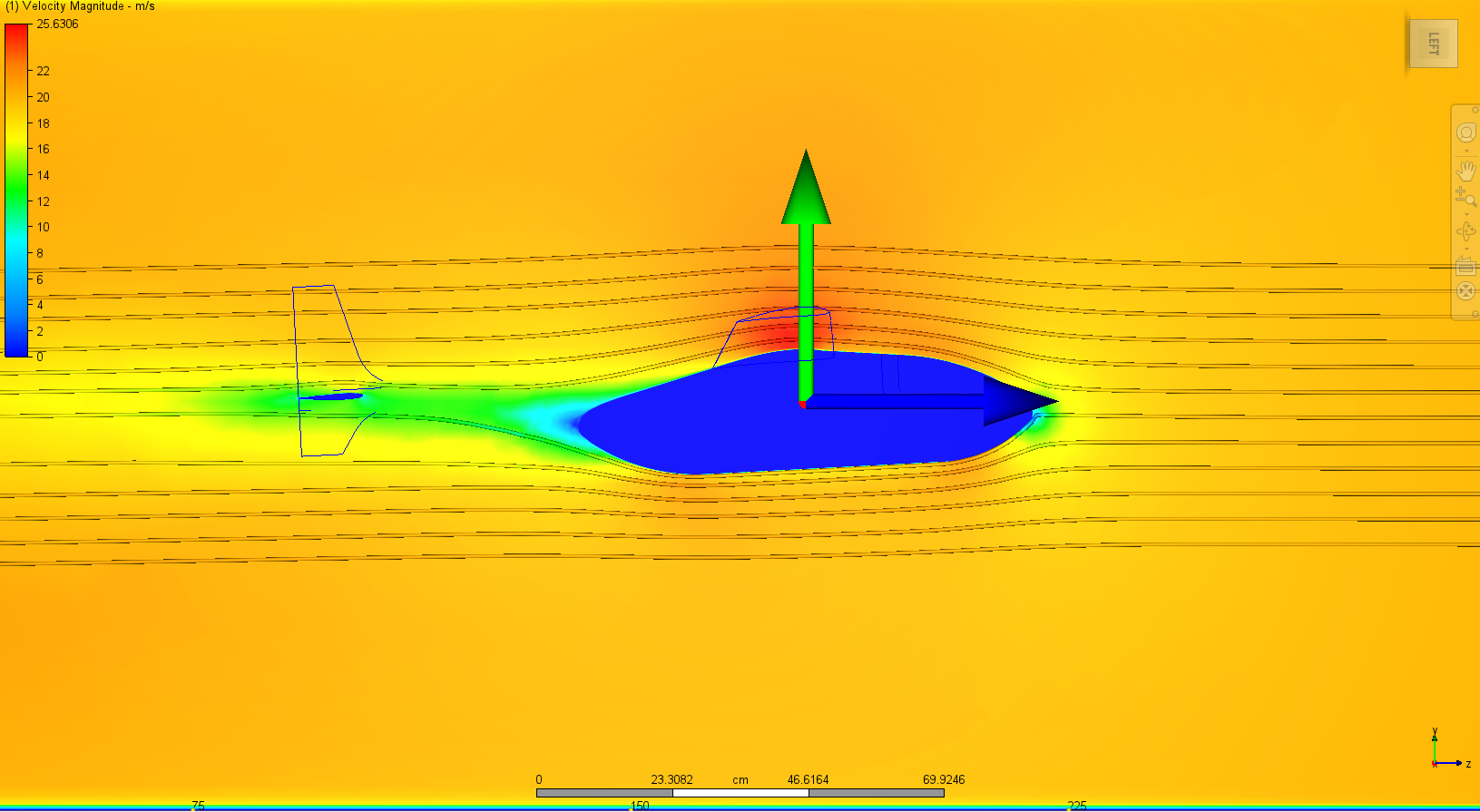 CFD simulation to determine effect of wing wake on horizontal stabilizer.
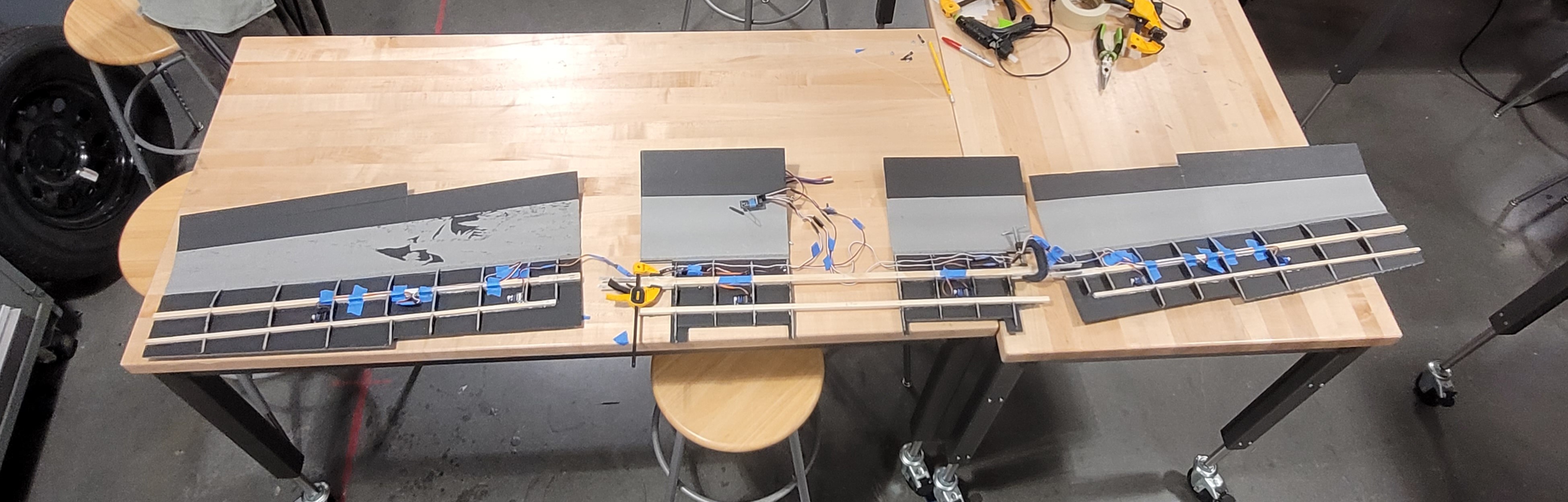 Current progress on full-scale foamboard prototype.
From December 2025: